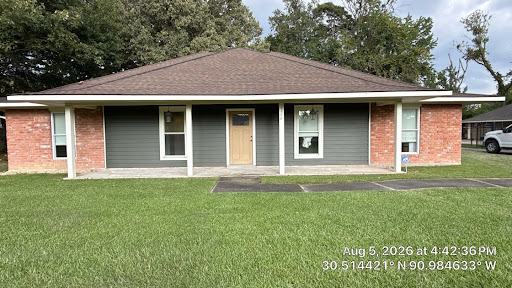
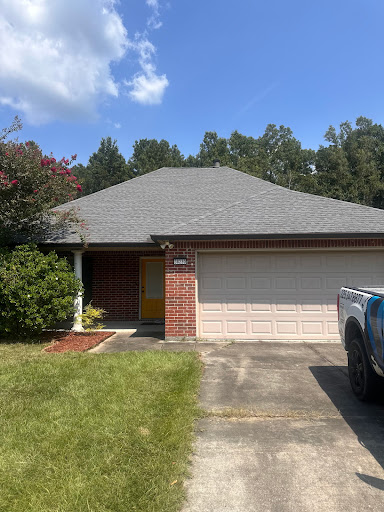
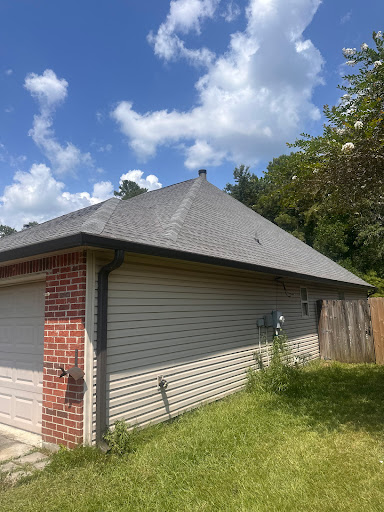

At Empire Roofing & Exteriors, we make the process of roofing and gutter services simple and stress-free for you.

Protecting Your Empire
Baker sits in one of the wettest parts of Louisiana, and your roof takes the full force of that reality every year. Hot, humid summers push temperatures into the 90s while heavy spring and summer thunderstorms roll through with enough wind to tear shingles loose and send water searching for any gap it can find. With close to 60 inches of rain falling annually, a roof that has even minor damage does not stay a minor problem for long. The constant moisture accelerates wear on asphalt shingles, feeds algae growth, and works away at flashing around chimneys and vents until leaks start showing up inside your home.
Most homes in Baker were built between the 1970s and the early 2000s, and those ranch-style and single-story structures were designed with asphalt shingle roofs that have now spent decades expanding and contracting through Louisiana’s temperature swings. That cycle weakens shingles over time and creates gaps where water gets in. Humidity trapped under a poorly ventilated roof speeds up granule loss on the shingle surface, which only makes things worse. Catching these issues early and repairing them correctly is what keeps a manageable situation from turning into something much larger.
Empire Roofing and Exteriors understands how Baker’s weather conditions affect roofs at every level, from surface shingles down to the roof deck underneath. Residential roof repair here requires a thorough approach that starts with a proper inspection, identifies the actual source of the problem, and uses materials suited for this humid, high-rain environment.
Not knowing what to expect from a repair job can add unnecessary stress. The following outlines how Empire Roofing & Exteriors handles residential roof repair from initial contact through completion.
Baker’s combination of high humidity, heavy seasonal rain, and aging housing stock creates a specific set of roof problems that show up again and again. Knowing what typically goes wrong, and why, helps you recognize trouble early before it works its way into your home’s structure.
| Issue Type | Common Cause | Where to Look First |
|---|---|---|
| Torn or missing shingles | Wind gusts during spring and summer thunderstorms | Roof edges and ridgeline |
| Flashing leaks | Deterioration around chimneys, vents, and valleys over time | Chimney base and vent collars |
| Granule loss on shingles | Poor ventilation traps heat and humidity under the roof | Gutters and shingle surfaces |
| Pooling water and interior leaks | Inadequate drainage on flat or low-slope single-story roofs | Low points and interior ceiling stains |
| Shingle gaps and shrinkage | Repeated expansion and contraction through temperature changes | Shingle edges and seams |
Many of Baker’s older ranch-style homes carry all of these vulnerabilities at once, especially if routine upkeep has been skipped. A thorough attic inspection is often the best starting point since moisture shows up there before it ever becomes visible on your ceiling. Identifying the actual source of the problem, not just the visible symptom, is what separates a repair that holds from one that needs to be redone next season.
When replacement shingles are needed, matching the existing material in weight, granule texture, and color prevents weak points where old and new sections meet. This matters especially on Baker’s aging ranch-style roofs, where mixing incompatible shingle grades can create seams that lift under wind pressure or allow water to channel underneath.
Flashing around chimneys, pipe boots, and roof valleys takes a beating from Baker’s heavy seasonal rains and high humidity, and it deteriorates faster than the shingles around it. Repairs include resealing loose flashing or replacing sections that have pulled away, corroded, or cracked, which are some of the most common entry points for leaks on older local homes.
Trapped heat and moisture under a poorly ventilated roof speed up granule loss and shorten the life of asphalt shingles, a real concern in Baker’s year-round humidity. Where ventilation is contributing to the damage, repairs address intake and exhaust flow so the problem doesn’t return after the surface work is done.
Single-story ranch homes common in Baker often have low-slope rooflines where water can pool instead of running off cleanly after heavy spring and summer storms. Repairs to these areas focus on correcting drainage paths so standing water stops working against the roof deck and the materials above it.
Baker’s combination of heavy rainfall, persistent humidity, and aging housing stock means your roof is working harder than most. Repairs that are done correctly and completely the first time protect your home from the kind of water damage that quietly spreads before you notice it inside.
Late fall and early spring tend to be ideal windows for getting repair work scheduled, when the rain slows down, and the heat backs off enough to let materials set properly.
If something looks off with your roof, whether that’s a stain on the ceiling, shingles that have shifted, or flashing that’s seen better days, getting a proper roof inspection sooner rather than later is the straightforward move.
Empire Roofing and Exteriors serves homeowners throughout the Baker, LA area and is ready to take a look, walk you through what’s going on, and get it fixed. Reach out when you’re ready.
Got questions about your roof? We’ve got answers. From maintenance tips to insurance claims and repair timelines, our FAQ section covers the most common concerns homeowners have. Get informed and make confident decisions about protecting your home.
In Baker’s humidity, ventilation problems under the roof are often the hidden cause. When heat and moisture get trapped in the attic, they cook the underside of your shingles from below, breaking down the material well ahead of schedule. If your granules are washing into the gutters on a roof that should have years left on it, poor airflow is usually part of the story, not just age.
It depends on the scale of the job. Targeted shingle patches typically don’t require a permit, but repairs that touch structural roof decks or cover a significant portion of the roof fall under local code requirements, which also include wind uplift standards tied to Louisiana’s hurricane exposure. Knowing that threshold upfront keeps the job on the right side of the rules and protects you if you ever sell the home.
Peak summer and the height of spring storm season are the most challenging windows. Intense heat affects how repair materials bond, and scheduling work during a stretch of heavy afternoon storms creates obvious complications with keeping an open roof dry. Late fall and early spring give you the best combination of moderate temperatures and lower precipitation, which means the work gets done cleanly and holds the way it should.


We’re easy to work with!
At Empire Roofing & Exteriors, we make the process of roofing and gutter services simple and stress-free for you.
Trust in our commitment to deliver exceptional roofing and gutter services, backed by a written guarantee for your peace of mind.
With our roof installation service, we assure you your roof will possess the durability it needs to endure the elements for years to come.