A well-maintained roof is key to protecting teachers, students, and classroom materials from the weather. However, many schools ignore roof issues until they cause major problems like leaks, mold, or even structural damage. By then, replacing the roof can be costly and disruptive. That’s why it’s important to stay ahead of any potential roofing issues.
In this guide, we’ll walk you through the school roof replacement process to help make it easier for your administrators.
When Should You Replace Your School’s Roof?
You might be wondering when it’s time to replace your school’s roof. There are several clear signs that can help you decide. First, replacing an old roof helps prevent risks like leaks, mold, and structural damage, which keeps your students, teachers, and the building safe. A strong, new roof also protects your school’s materials from weather damage, which is key to maintaining a good learning environment.
Moreover, a well-kept roof can improve energy efficiency, lowering your utility bills and helping your school stay more sustainable. Investing in a new roof isn’t just about fixing a problem now—it’s about making sure your school is safe and well-maintained for the future.
Here are some signs that it’s time for a roof replacement at your school:
- Leaks and water damage: Older roofs are more prone to leaks and other issues. A full replacement will give you peace of mind knowing your building is protected.
- Age and condition: Most roofs last 20 to 30 years. If your roof is over 25 years old, it’s probably time to replace it before serious problems arise.
- Energy efficiency: A new roof with better insulation or cool roof can cut cooling costs by up to 40%, helping you save on energy bills.
- Maintenance and disruption: If you’re constantly repairing an old roof, it’s not only costly but disruptive. A new roof will reduce those repair needs and headaches.
- Aesthetics and curb appeal: A fresh roof improves your school’s appearance and makes a better impression on the community, showing that you care about the space where students learn.
Steps To Prepare For School Roof Replacements
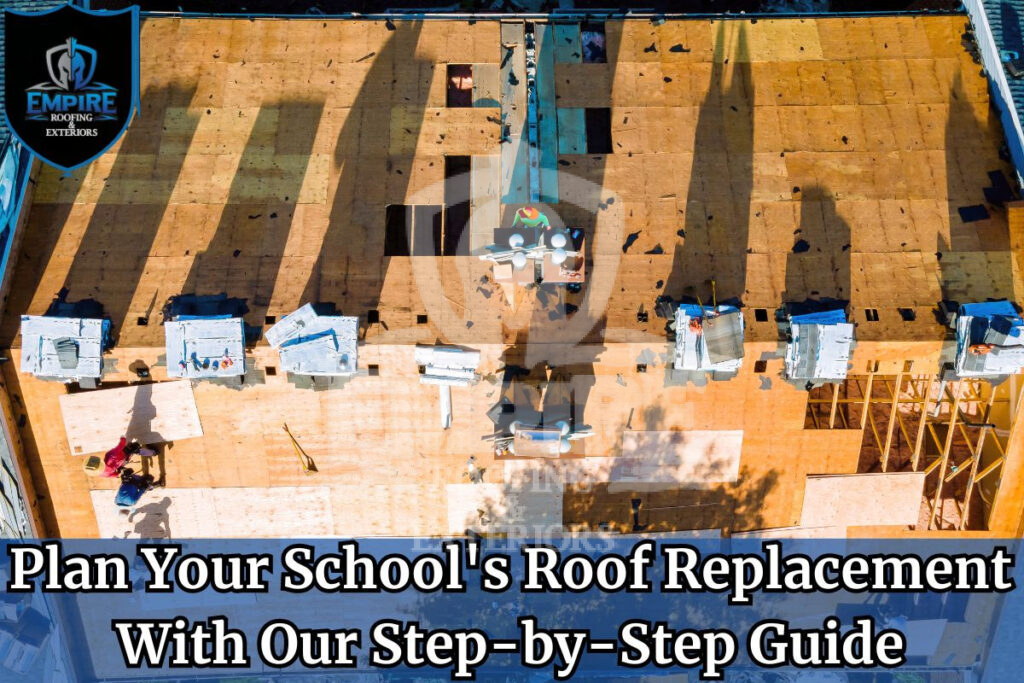
Replacing your school’s roof is a big task, but with proper planning, it can be a seamless process. Here’s a step-by-step guide to help you navigate the roof replacement process for your school:
1. Assess the Condition of Your Existing Roofing Material
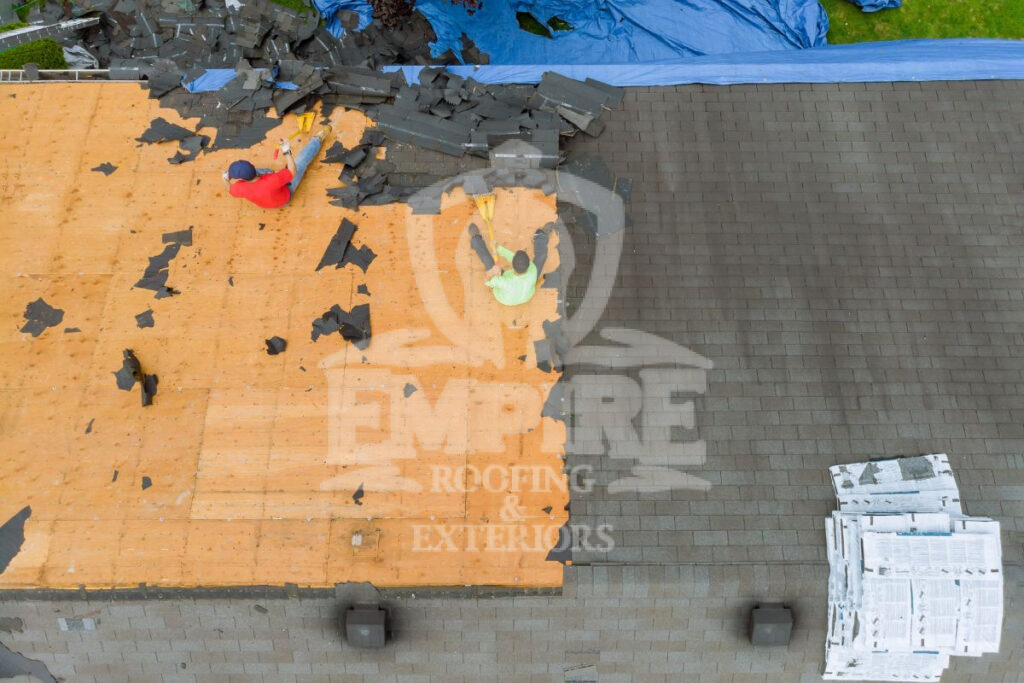
Before you begin planning a school roof replacement project, you need to evaluate the current condition of your roof. This involves a professional contractor inspecting for signs of aging, damages such as leaks, water stains, cracked membranes, water ponding and more.
The contractor will also assess roof drainage, ventilation, and the overall structure. Even if your roof looks fine, materials only last 20 to 30 years, and some issues may be hidden beneath the surface. This assessment will help determine if a full replacement is necessary and guide your planning process.
Moisture Measurements
A thorough expert evaluation should include moisture surveys to check for hidden moisture accumulation, which can be a major concern. Advanced tools like infrared devices, drones with high-definition cameras, and moisture probes can detect areas with potential moisture problems that may not be visible to the naked eye. In some cases, nuclear roof moisture testing may also be used to confirm suspicions.
If moisture is found, it could increase the cost of your project. However, many school roofs with moisture issues can be restored instead of fully replaced—saving up to 50% in costs. Restoration is possible as long as your school roof still meets acceptable construction standards. The key is catching potential moisture problems early, so a detailed assessment is important here.
2. Setting a Budget and Timeline
Once you’ve decided to replace the roof, it’s time to establish a realistic budget and timeline. Collect estimates from several contractors, taking into account the costs of labor, materials, permits, and any potential backup plans.
Be mindful of the school schedule to minimize disruptions. Summer break or other long breaks are the best times for school roof replacement. Work with your roofing contractor to create a detailed schedule, factoring in weather conditions, material delivery, and prep work, to ensure a smooth project.
3. Choosing the Right Roofing Materials
The materials you choose for your school’s roof will impact its cost, performance, and longevity. Consider factors like energy efficiency, durability, and resilience to weather. You don’t want to compromise on roofing material—it can be costly in the long run. Quality materials reduce the need for repairs and ensure a longer-lasting, reliable roof for your school.
Some popular roofing materials for school roofs include:
- EPDM (Ethylene Propylene Diene Monomer) for low slope or flat roofs
- Modified Bitumen or TPO (Thermoplastic Olefin) for flat roofing systems
- Asphalt Shingles for sloped roofs
Work with a roofing professional to weigh the pros and cons of each material and choose the most suitable one based on your climate, school needs, and budget.
4. Hiring a Qualified Roofing Contractor
A successful roof replacement relies heavily on hiring a qualified, experienced roofing contractor. Look for local contractors with experience in school roofing projects. Verify their credentials, insurance, and previous work.
It’s also important to check their references and ensure they have strong project management and communication skills. A reliable contractor will give you a detailed project plan and make sure the work is done to high standards. You can also check their ratings with the Better Business Bureau (BBB), Yelp and Google Reviews.
5. Obtaining Permits and Approvals
Before starting the roof replacement, make sure you obtain all the necessary permits and approvals from local authorities to avoid delays or fines. These may include:
- Building Permit: Required by most municipalities for roof replacements.
- Zoning Approval: Ensure the new materials comply with local zoning regulations.
- Historic Preservation Approval: If the school is a historic building, you’ll need permission for exterior changes.
- Environmental Permits: Depending on your location, you might need permits for stormwater management or erosion control.
Factor in time for permits to be approved when planning your project timeline.
If you’re in Louisiana, read our blogs on “Building Codes“ to better understand local roofing regulations.
6. Prepare for the Replacement Process
Proper preparation is key to minimizing disruption during the roof replacement. Inform staff, teachers, and students about the schedule, potential noise, dust, and access restrictions. You may need to temporarily relocate classrooms or events to avoid interference with the project.
Scheduling the replacement during school breaks—such as summer vacation—will help make sure that the school’s daily activities aren’t disrupted. Make sure to communicate clearly with everyone involved for easy process.
7. Post-Installation Maintenance and Inspection
Once the new roof is installed, ongoing maintenance is important to ensure its longevity. Set up a schedule for regular inspections and maintenance tasks to keep the roof in top condition.
Key post-installation tasks include:
- Cleaning gutters and downspouts to prevent water buildup and leaks.
- Inspecting and resealing caulking or flashing around vents, chimneys, or other protrusions.
- Removing debris (such as leaves or branches) that could damage the roofing surface.
- Checking for damage after severe weather events to catch any potential issues early.
By staying proactive with maintenance, you’ll help ensure that your new roof lasts as long as possible and continues to protect your school and its occupants. It is best to hire a roofing contractor who is familiar with the area for regular maintenance and inspection.
When Is The Right Time To Get a School Roof Replacement?
The best time to replace your school’s roof is during moderate weather, like spring. This helps avoid damage from moisture and makes it easier for workers to complete the job efficiently. Scheduling the replacement during school holidays or summer breaks is also ideal, as it minimizes disruption to classes and keeps students and teachers safe from construction mishaps.
When deciding the right time for a roof replacement, consider the age of the roof, any existing damage, its ability to handle heat, and whether it needs better protection from moisture. Planning around these factors will help ensure a smooth and successful roof replacement project.
What Kind Of Roofing Material Is Common For Schools?
When it comes to choosing the right roofing material for your school, several options are popular depending on the climate and building needs. Here are some common choices:
Single-Ply Membranes
For schools in Louisiana, TPO (Thermoplastic Olefin) and EPDM (Ethylene Propylene Diene Monomer) roofing membranes are popular choices. These materials are affordable, sturdy, and offer excellent energy efficiency. They can also be coated for additional protection against weather and UV damage, making them a great option for school roofs.
Modified Bitumen and BUR Roofs
Modified bitumen and built-up roofing (BUR) are commonly used for flat roofs in schools. These roofing systems provide reliable protection and are especially good for areas with low slopes. While they are effective, their installation can take longer, and finding leaks may be more challenging compared to other materials.
Asphalt Shingles
Asphalt shingles are a popular choice for school roofs, especially in areas like Louisiana. They are known for their affordability, durability, and ease of installation. Asphalt shingles are also energy-efficient, particularly when treated with reflective coatings. While they may not last as long as metal roofs, their lower initial cost and relatively low maintenance make them a cost-effective option, especially for schools on a budget.
Choosing the right roofing material depends on your school’s needs, budget, and climate, but these materials offer great options for schools looking for durability, energy efficiency, and long-term value.
Conclusion
Replacing the roof at your school is a big task, but with the right preparation and execution, it can go smoothly. By following the simple steps outlined here, you can ensure that your school gets a new roof on time, within budget, and with the highest standards of quality and safety.
And when it comes to expert roof replacement services for schools, trust Empire Roofing & Exteriors. Our team has expertise in school roof replacements, ensuring students and staff stay safe and protected. To get the professional roof replacement services in Southern Louisiana contact us today to learn more about how we can help your school get the quality roof it deserves. Give us a call at (225) 347-8877.